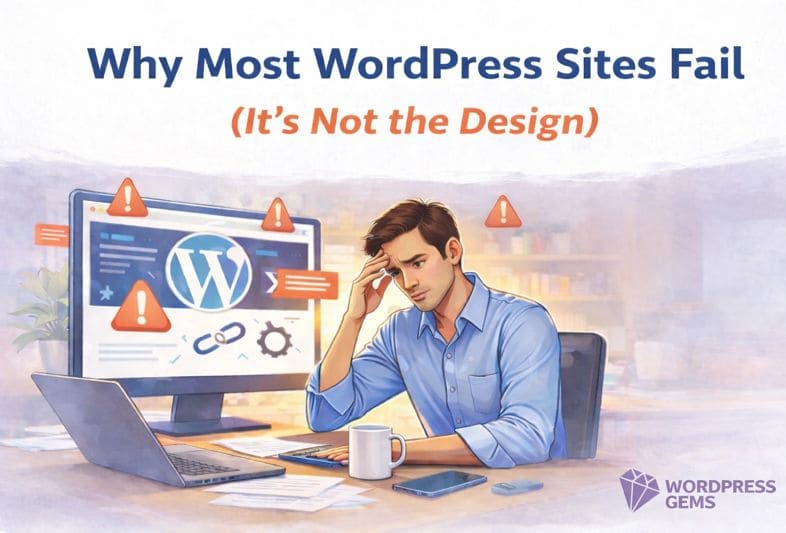
When a WordPress website starts underperforming, the first reaction is usually the same — it’s time for a redesign.
However, in most cases, design isn’t the real problem. Many WordPress sites that struggle to generate leads or conversions actually look modern and visually appealing. The real issue lies beneath the surface: reliability.
A website that feels slow, inconsistent, or fragile quietly erodes user trust and ultimately impacts business results.
While design affects perception, it rarely causes a website to fail.
What truly hurts performance are hidden issues like:
These problems create friction in the user experience, and even small moments of friction can reduce conversions significantly.
Many websites are launched and then left untouched. Without regular maintenance:
Over time, this leads to instability and sudden breakdowns.
Adding plugins for every feature may seem convenient, but it introduces risk.
Too many plugins can lead to:
A streamlined tech stack is always more reliable than a bloated one.
Hosting plays a critical role in performance. Cheap hosting often results in:
Even a well-built site can fail on weak hosting.
Many businesses assume backups exist — until they need one.
Without tested backups:
A reliable backup system is essential for business continuity.
Clicking “Update All” without testing can break layouts or functionality.
Best practice includes:
Updates should improve stability, not introduce risk.
Design problems are visible. You can spot outdated visuals or cluttered layouts instantly.
Reliability problems are subtle. They appear as small inconveniences — an extra second of load time, an occasional error, or a failed form submission.
Individually minor, collectively damaging.
Visitors may not know what’s wrong, but they sense the friction and leave.
After years of working with WordPress businesses, a clear pattern emerges: neglect.
Websites are treated as finished products rather than ongoing systems. But WordPress evolves constantly through updates, security patches, and infrastructure changes.
Without proactive management, small technical issues compound into major performance problems.
Redesigns are visible and easy to justify. They create the feeling of progress.
Infrastructure improvements, on the other hand, happen behind the scenes — better code quality, optimized databases, improved hosting environments.
Because reliability work isn’t visible, it’s often ignored until problems become severe.
A well-maintained WordPress site is simple and predictable:
In other words, it just works — allowing businesses to focus on growth rather than technical issues.
Before investing in a redesign, evaluate the foundation:
If these areas aren’t optimized, a redesign will only provide temporary improvement.
Most businesses don’t need a more beautiful WordPress website.
They need a more dependable one.
When reliability becomes the priority, performance improves, conversions increase, and design enhancements become far more effective.
So, if your agency is currently evaluating its WordPress tech stack or facing builder performance challenges, now is the ideal time to audit your workflow and standardize your toolkit for 2026.
Book A Call Now:
https://wordpressgems.com/
 WordPress Gems