Introduction
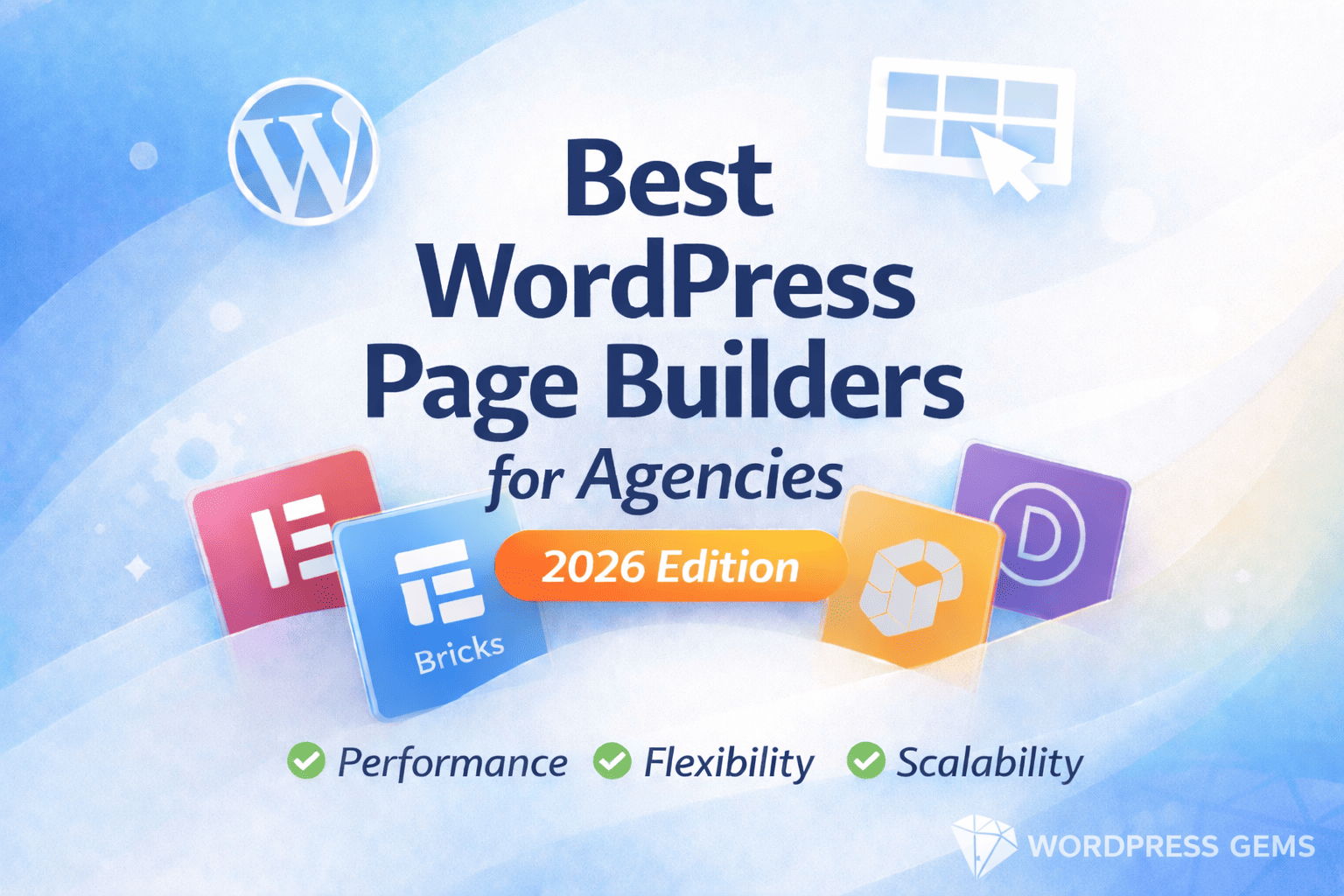
Choosing the right WordPress page builder can significantly impact how efficiently your agency delivers projects, manages clients, and scales operations. Today, more than ever, page builders are no longer just visual design tools — instead, they have evolved into complete website-building ecosystems with performance optimization, collaboration features, and advanced design controls.
In this guide, we’ll break down the best WordPress page builders for agencies, carefully comparing their strengths, limitations, and ideal use cases so that you can confidently choose the right stack for your workflow.
To begin with, agencies often struggle to balance speed, flexibility, and long-term maintainability. On one hand, some builders enable rapid design but generate bloated code. On the other hand, others produce clean output but can slow down production timelines.
As a result, without the right builder in place, teams frequently face:
Importantly, your page builder is not just a design tool — rather, it becomes a core part of your agency’s delivery system.
When you choose the right builder, you can:
In other words, your builder plays a direct role in how well your agency scales.
First of all, Elementor continues to dominate in 2026 thanks to its massive ecosystem, intuitive interface, and strong community support. Additionally, features like theme building, dynamic content, and collaborative workflows make it suitable for a wide range of agency projects.
Best for: Client projects, marketing websites, and fast delivery
Meanwhile, Bricks has rapidly gained popularity among performance-focused agencies. Not only does it provide visual building capabilities, but it also offers developer-level control and significantly cleaner output compared to traditional builders.
Best for: Custom builds and speed-focused projects
Similarly, Breakdance stands out for its powerful design system, global styling options, and advanced layout capabilities. Therefore, agencies looking to achieve modern, high-end designs without heavy coding often gravitate toward it.
Best for: Design-heavy websites
On the other hand, Beaver Builder is widely known for its reliability and stable architecture. Because of this, it remains a dependable choice for agencies managing long-term or enterprise-level projects.
Best for: Enterprise sites and ongoing maintenance clients
At the same time, the native WordPress block editor has matured significantly. When combined with high-quality block libraries, it offers a lightweight, scalable, and future-proof solution.
Best for: Content-driven sites and minimal plugin stacks
Finally, Divi continues to be popular among agencies that prefer an all-in-one theme and builder solution. With its extensive layout library and visual controls, it enables quick yet polished deployments.
Best for: Fast design launches
However, even with great tools available, agencies often make these mistakes:
To put this into practice, follow these steps:
Ultimately, there is no single “best” WordPress page builder for every agency. Instead, the right choice depends on your workflow, client requirements, and performance priorities.
That said, agencies that standardize their builder stack consistently achieve faster delivery, stronger quality control, and better profit margins. The key is selecting a tool that aligns equally well with your technical processes and your client experience.
So, if your agency is currently evaluating its WordPress tech stack or facing builder performance challenges, now is the ideal time to audit your workflow and standardize your toolkit for 2026.
Book A Call Now:
https://wordpressgems.com/
 WordPress Gems